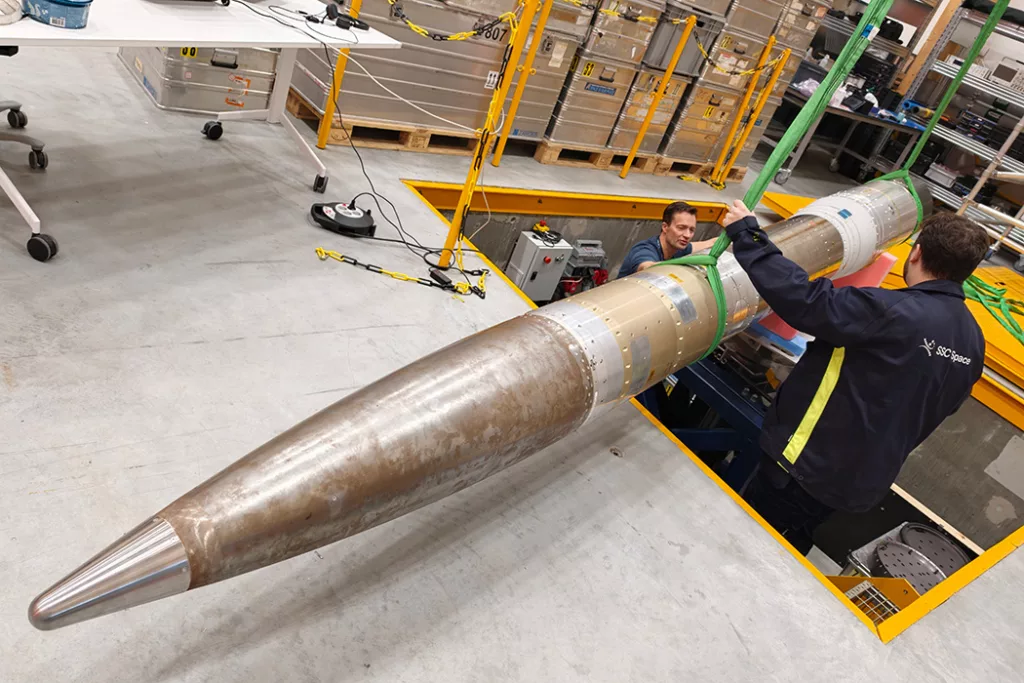
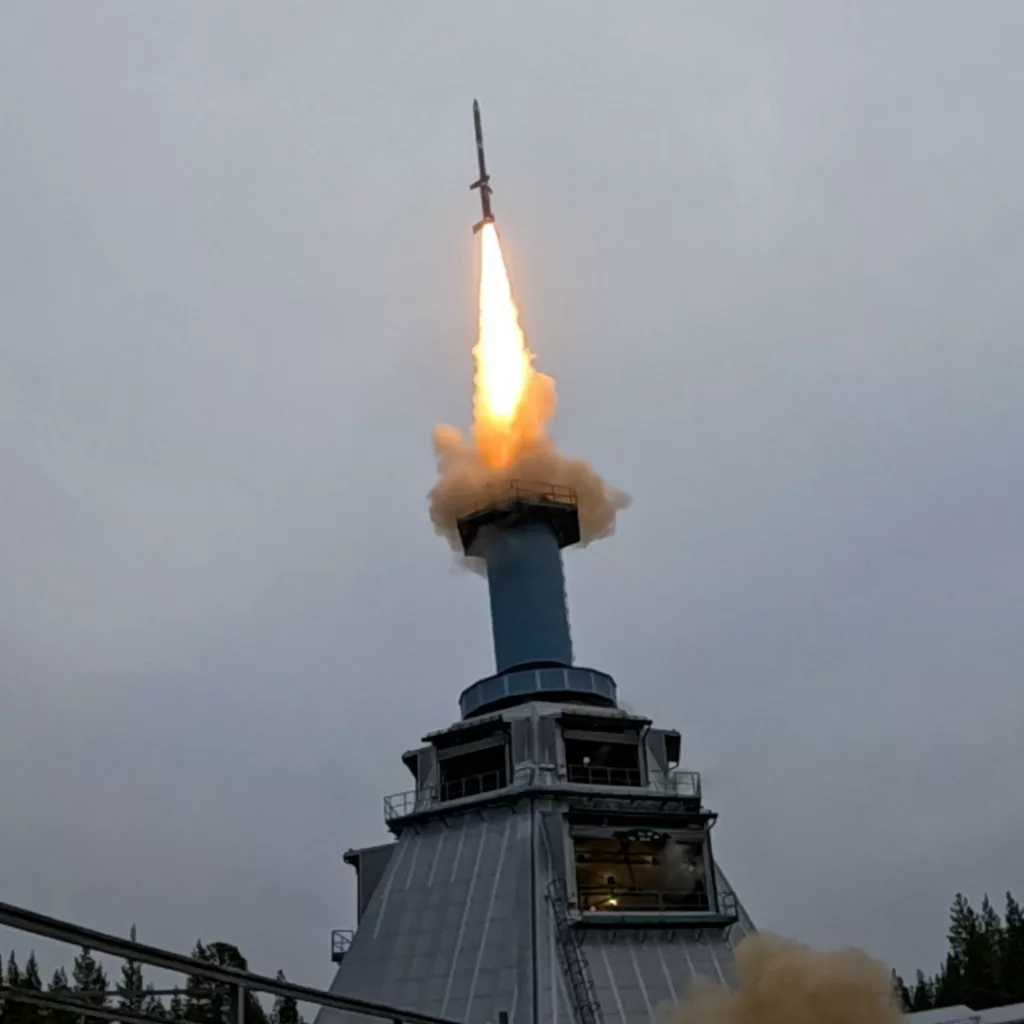
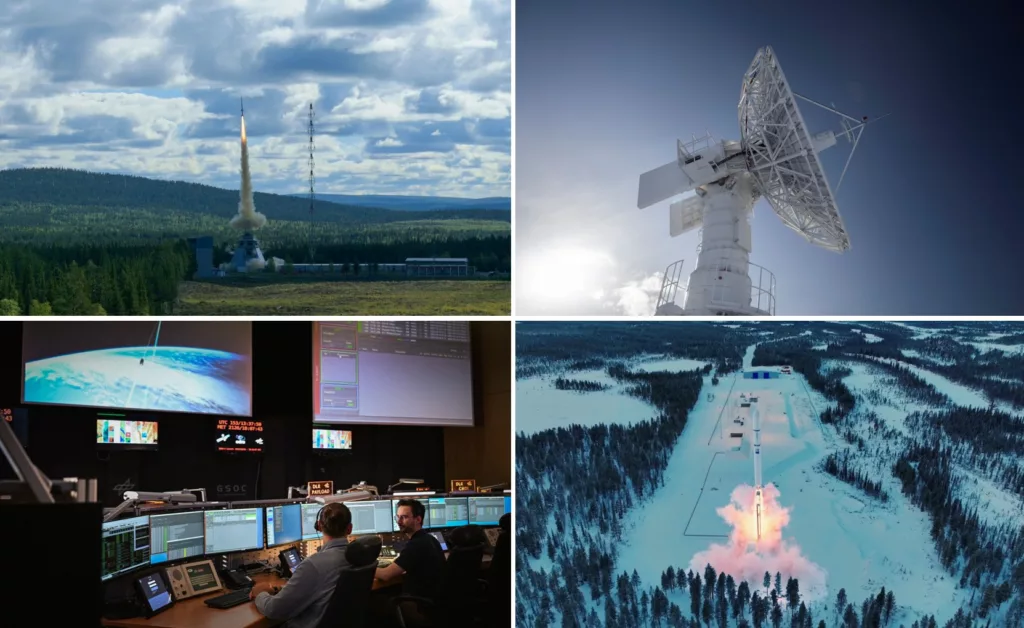
During November 2026, the sounding rocket SYSTER/COUSIN will be launched from Esrange Space Center in northern Sweden. The mission will send a scientific payload into an active auroral arc to investigate electric currents and other small-scale processes of the Aurora Borealis phenomenon.
“The rocket and payload are a complex joint venture between SSC Space, DLR MORABA and the scientific teams from NASA, KTH Royal Institute of Technology, Canada Space Agency (CSA), Department of Meteorology at Stockholm University (MISU) and additional universities. After several years of preparation, it is very satisfying to now be able to provide the scientists with new data that can be analyzed”, says Jimmy Thorstenson, Campaign Manager, SSC Space.
A payload packed with experiments
The payload combines experiments from research institutions in Sweden, Germany, the United States and Canada.
Flying on a single-stage Black Brant V motor, the payload was designed to reach an apogee of about 180 kilometers. During the flight, it will deploy eight free-falling units: four SPIDER probes measuring electric and magnetic fields and plasma parameters, and four spherical MUSCAT units measuring atmospheric density and temperature. Both experiments are from KTH Royal Institute of Technology in Stockholm.
“Launching these kinds of atmospheric research payloads is always a challenge,” says Jimmy Thorstenson. “In addition to weather constraints, we also have the scientific criteria that requires darkness – no sun or moon – the correct type of active aurora and clear skies. Conditions that are challenging to find at the same time”.