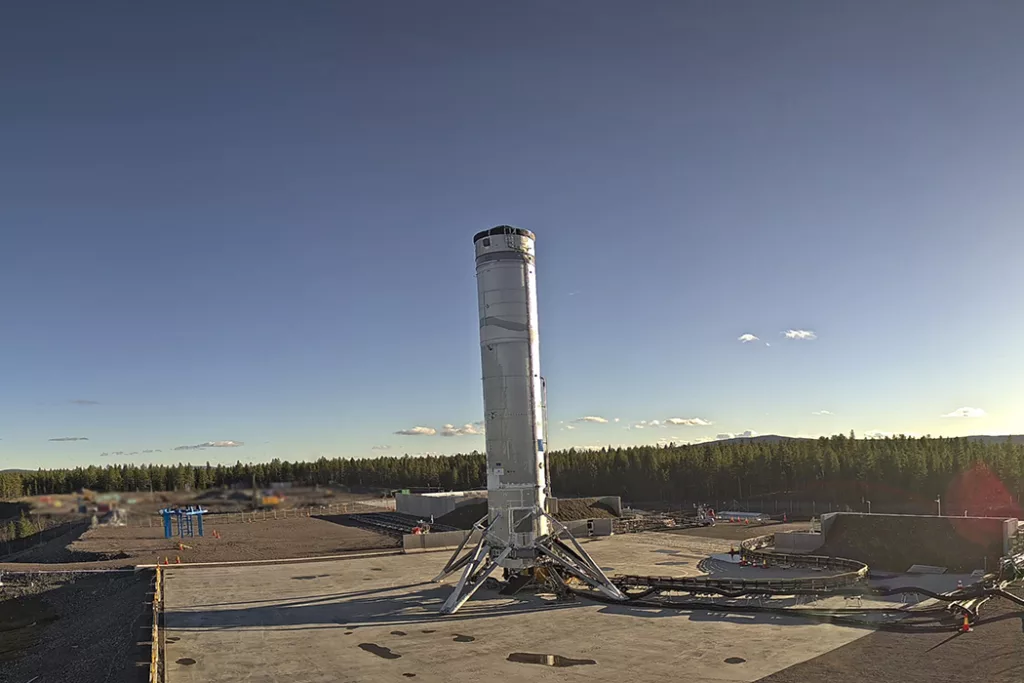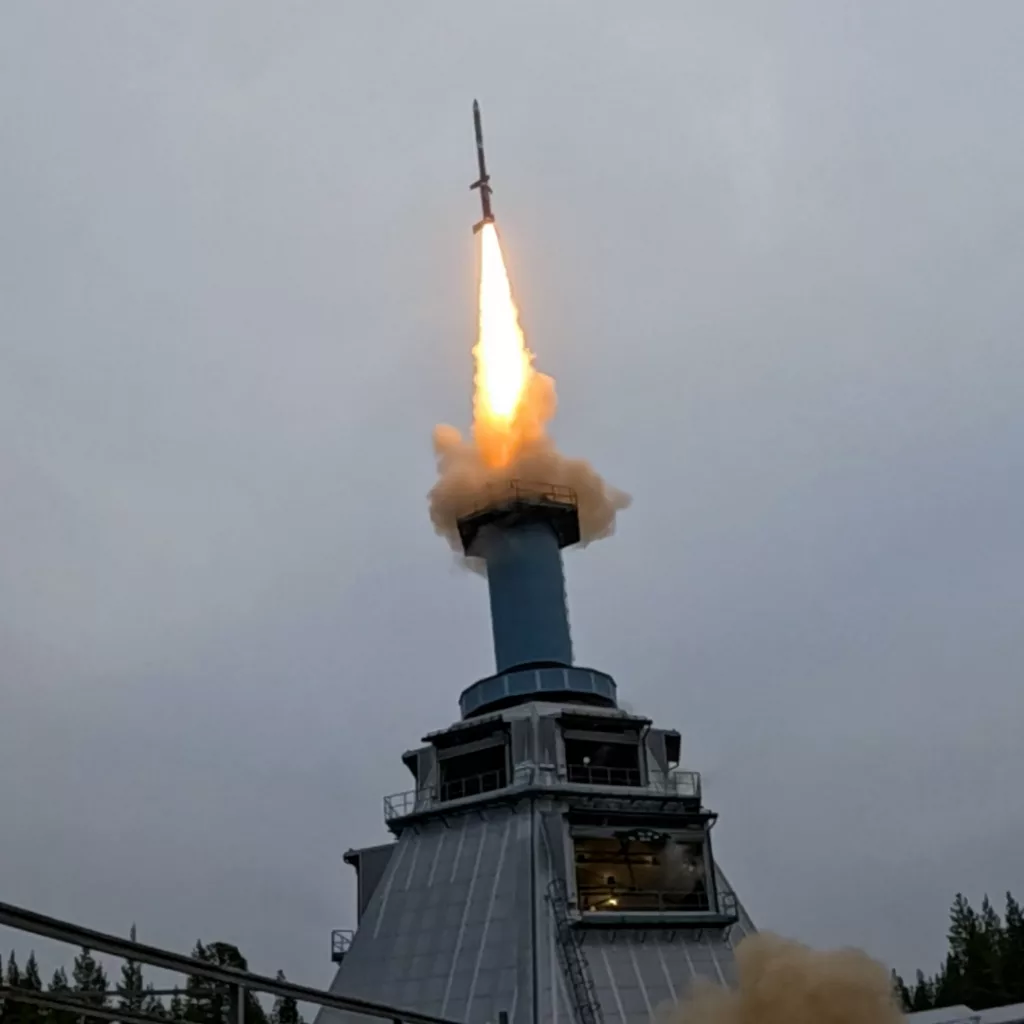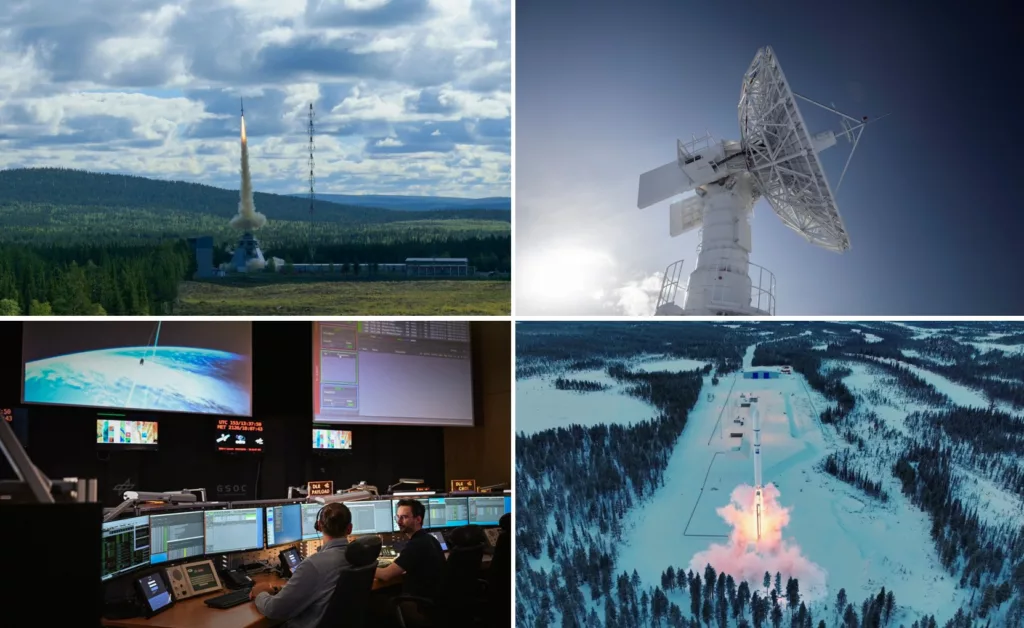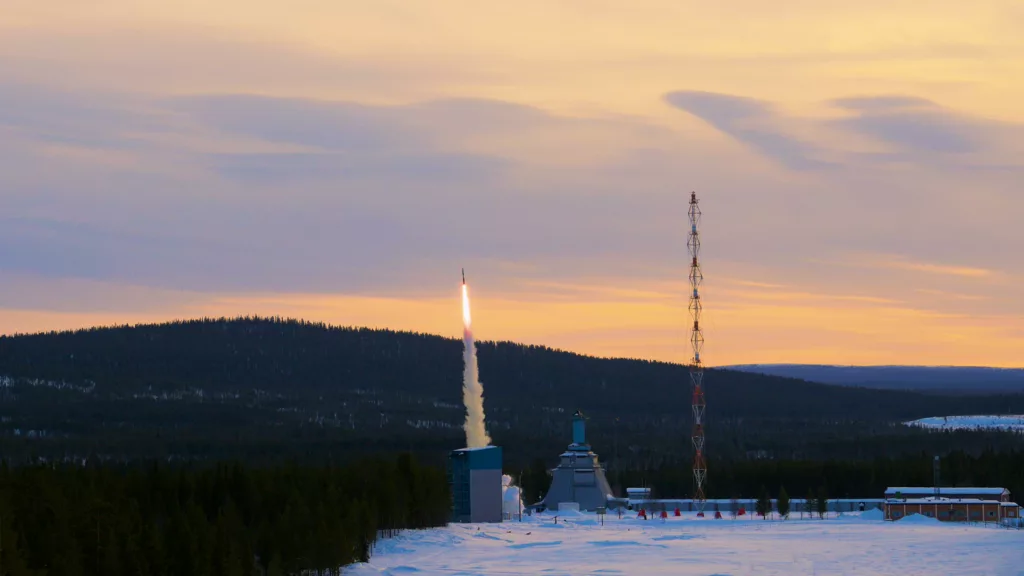
Over the course of two days, sounding rockets REXUS-35 and -36 were successfully launched from Esrange Space Center in northern Sweden: The first one on Tuesday 10th of March at 07:02, and the second on Thursday 12th of March at 12:35 local time.
Around 75 university students from eight teams and universities across Europe have been working for more than a year on their experiments. Just over a week ago they arrived at Esrange to carry out their experiments onboard a sounding rocket, as part of the REXUS/BEXUS student program.
REXUS 35 launched four experiments focusing on auroral observations, thermal protection systems, re-entry technologies and mixing of material in reduced gravity.
- Team APEX observes Aurora and Dayglow.
- Team HEARTS ejects a free falling unit: a capsule that will test a heat shield.
- Team MARTINI studies mixing of resin in reduced gravity.
- Team TRACER tests transpiration cooling, with gas and liquid flow across the heat shield.
REXUS 36 launched another four experiments, ranging from crystal growth and biological research in self-healing technologies, to launch vehicle dynamics and simulations of Saturn’s icy moon plumes.
- Team GOOSE studies crystallization growth in reduced gravity conditions.
- Team THRIVE flies a biological payload with different samples at low temperatures to observe how they survive the flight – to study self-healing materials for healing in space.
- Team VIPER observes the physics of the full body vehicle dynamics during flight under launch loads.
- Team MEEGA research plume formation on the Saturn moon Enceladus.
“They actually have a setup that replicates these plumes, so water vapor being injected at a certain speed, temperature, and so on,” explains Esmée Menting, Program Manager for REXUS/BEXUS in SSC Space, and continues:
“The launch of REXUS 35 on Tuesday and REXUS 36 on Thursday were both very successful and the payloads were recovered shortly after. The teams have already received their experiments and are in the process of reviewing their flight data.”
Learn more at https://rexusbexus.net/
See video footage of the launches at https://instagram.com/ssc_space/
For more information, please contact:
Philip Ohlsson, Press & PR, +46 (0) 707 21 70 26, philip.ohlsson@sscspace.com