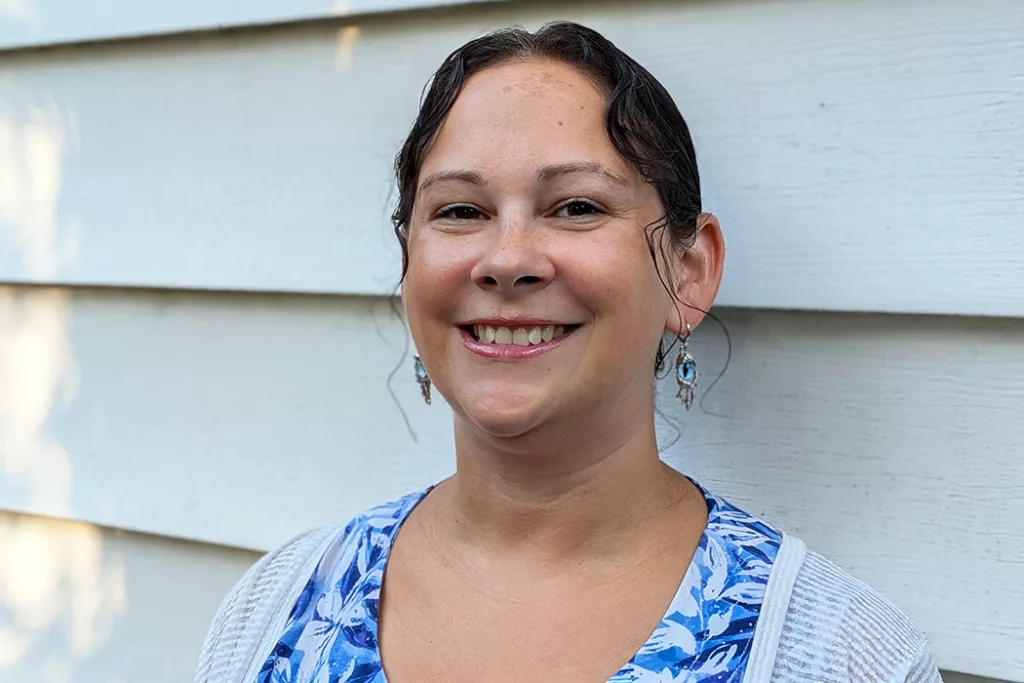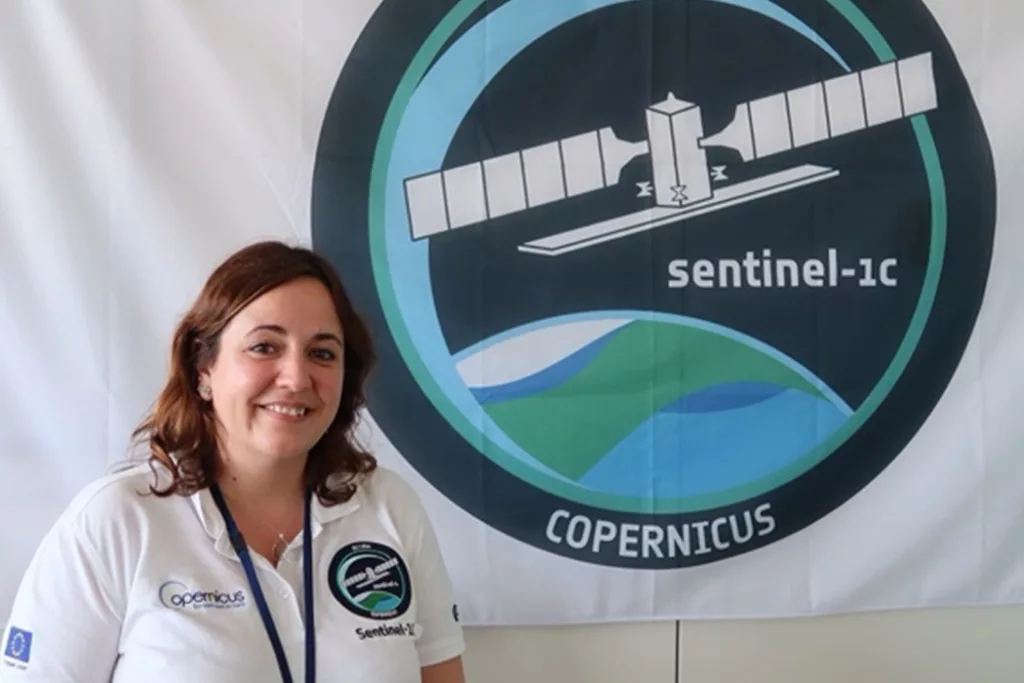
Meet Ainhoa Solana Esteban, who supports the European Space Agency’s (ESA) Sentinel-1 Copernicus mission, contributing to one of Europe’s most important Earth observation programs.
Free, open, all-weather, and day-and-night. As the first mission launched under the Copernicus program Sentinel-1 has become a cornerstone of European Earth observation, generating more than 36 petabytes of open data to support environmental monitoring, maritime surveillance, sea-ice tracking, and emergency response efforts worldwide.
Ainhoa is based in the Netherlands and works across several critical subsystems within the space segment of the mission. Her responsibilities include the AIS Payload (Automatic Identification System), the Laser Communication Terminal (LCT), as well as Payload Data Handling and Power subsystems.
“The mission itself is incredibly meaningful because the data is openly available and used worldwide for so many different applications,” Ainhoa explains. “It’s rewarding to contribute to something that has such a broad impact on society.”
One of the systems she supports is the Laser Communication Terminal, also known as the Optical Communication Payload. The technology enables optical inter-satellite links, allowing Sentinel-1 satellites to transmit large volumes of data to relay satellites before the information is sent to ground with very low latency.
She also works with the AIS subsystem, which enables maritime traffic monitoring from space by identifying ship positions, speed, and navigation status. Combined with radar imagery from Sentinel-1, the data can help identify vessels at sea and even detect “dark” vessels transmitting inaccurate or no navigation information.
For Ainhoa, the last few years have been particularly memorable. The final two satellites of the first Sentinel-1 generation, Sentinel-1C and Sentinel-1D, were launched in December 2024 and November 2025, marking major milestones for the program.

“In just three years, I’ve had the privilege of participating in two highly enriching ground testing and launch campaigns,” she says. “We successfully launched Sentinel-1C onboard Vega-C’s return to flight and Sentinel-1D on Ariane 6. I was also involved in both LEOP and In-Orbit Commissioning campaigns, including serving as Project Support Lead for the Sentinel-1D LEOP.
Even with more than 15 years of experience in space systems engineering, these missions continue to inspire her. “The experience has strengthened my technical expertise and reinforced my motivation to contribute to the future next generation of Sentinel-1 satellites,” she says.
Now, with the first generation of satellites successfully in orbit, Ainhoa is also contributing to ESA’s Sentinel-1 Next Generation team, helping shape the future of a mission that will continue delivering critical Earth observation data for years to come.